Arcadia Wood Flooring handles hardwood floor repair in Arcadia, CA, serving surrounding cities including Mayflower Village, North El Monte, East Pasadena, South Monrovia Island and Temple City. For more than 20 years we have replaced stained boards, silenced squeaks, reset loose parquet and brought damaged sections back into line with the floor around them. Most of the floors we repair are older oak strip, parquet or fir, with a growing share of engineered and wide plank floors from newer houses.
A repair only lasts when the cause is fixed along with the symptom. A cupped board by a sliding door, a soft spot near a bathroom or a pile of pellets under a window all point to something beyond the damaged wood. We find that source first, whether moisture, structure or pests, and write down what we found before recommending anything.
When boards do need replacement, the goal is a repair you have to look for. That means matching species, cut, width and aged color, weaving new pieces into the existing pattern, and finishing the area so the change blends into the room.
Water, Moisture And Stain Damage
Threshold Water Damage By Sliding Doors
Rain blown against a sliding glass door, a failed door sill, or water tracked in from a pool deck can soak the boards right at the threshold. The first signs are gray boards and slight cupping, and left longer, black water stain and soft edges appear.
We take moisture meter readings in the damaged area and in dry boards nearby to see how far the water has traveled. Boards with stains that run deep are cut out and replaced, and the door sill or flashing problem is flagged so the same boards are not ruined again next winter.
When an insurance claim is involved, we document the loss with photos, moisture readings and a written repair scope. Adjusters work from records, and records made before boards come up are the ones that count.
Pet Urine Stains In Oak And Fir
A pet urine stain often starts as a dark ring and spreads deeper over time as it reacts with tannins in the wood. Surface marks may sand out, but stains that have turned black usually run below the reach of a sander.
Those boards are removed and replaced with matching wood, and the subfloor underneath is checked for odor and damage. Sealing any affected subfloor before new boards go down keeps the smell from coming back through the repair.
Cupping, Crowning And Buckling
Cupping, where board edges sit higher than the center, means one side of the wood is wetter than the other. Crowning often follows when a cupped floor is sanded before it dries, and buckling happens when boards swell with nowhere to go and lift from the subfloor.
We track down the moisture source, which can be a leak, a damp crawl space, missing vapor retarder over a slab, or a tight installation with no expansion gap. Drying and monitoring come before sanding or board replacement, since fixing wood that is still moving only moves the damage.
Structural Problems Under The Wood
Squeaks, Nail Pops And Hollow Spots
Squeaks are usually boards rubbing together or against loose flooring cleats as the house moves. Nail pops appear when fasteners back out, and hollow spots on glue-down floors mean adhesive has let go.
From a crawl space, we can often snug the subfloor to the floor joist from below without marking the finished surface. Where access is limited, we set fasteners from above and fill the holes so they disappear into the grain.
Soft Spots, Sagging And Sloping Floors
A soft spot near a toilet, tub or dishwasher often means rot in the subfloor below. A sagging floor, sloping floor or bouncy floor across a room points to joists or supports under the house.
We inspect from the crawl space on raised foundations and look for cracked, notched or undersized joists that can be sistered. Structural work gets done before wood repairs, since patching the surface of a floor that is still moving does not hold.
Drywood Termites And Powderpost Beetles
Drywood termite damage often shows as small kick-out holes with piles of frass on the floor below. Powderpost beetle damage leaves fine, powdery dust and tiny round exit holes, usually in older, softer wood.
We recommend a Wood Destroying Pests and Organisms Inspection Report before replacing damaged boards, and treatment such as tent fumigation is handled by a licensed pest control company, not by us. Repairs start once the pest problem is resolved.
Board Replacement And Blending
Weave-In Repairs For Strip And Plank Floors
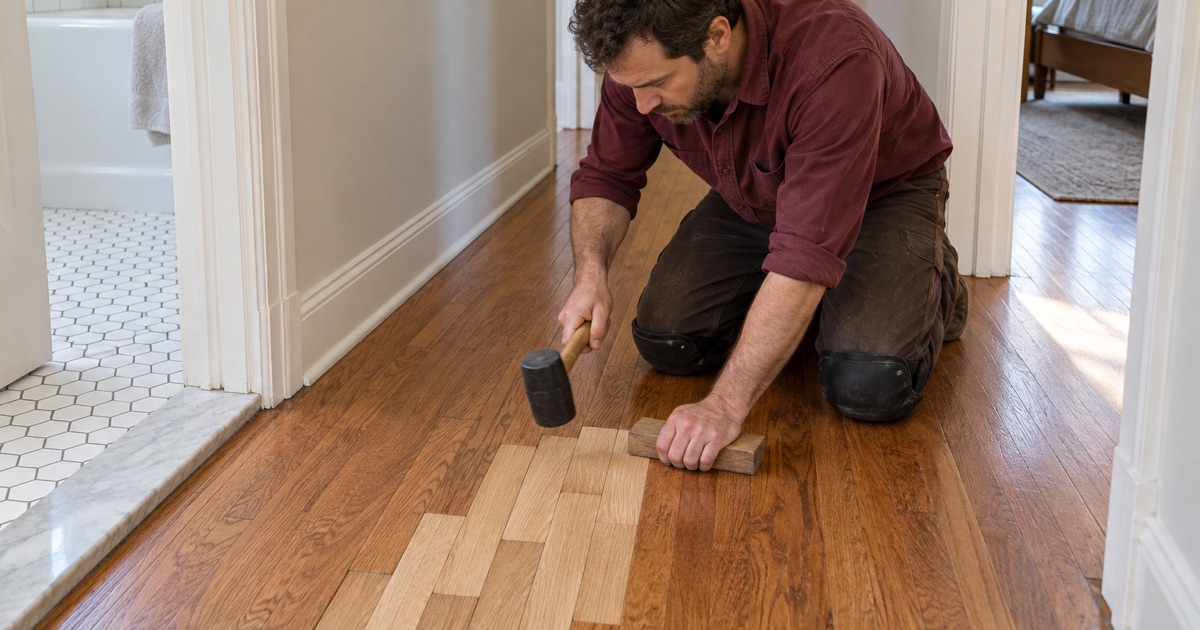
A weave-in repair removes damaged boards in staggered lengths rather than cutting a straight square patch. New boards are fit into the same pattern so end joints stay spread out and the repair does not form a visible block.
Replacement boards are chosen to match species, width and grain, and we trim tongues and grooves so each piece locks in flat. The repaired area is then sanded level with the surrounding floor.
Matching Aged Color And Finish
New wood is almost always lighter than boards that have aged for decades under old finish. Staining new boards, using salvaged wood, or refinishing the surrounding area are ways to close that gap.
We test color on scrap wood from the repair before touching the floor. When a full-room refinish is the only way to get an even look, we tell you that before starting rather than after the repair stands out.
Engineered Plank And Veneer Repairs
Engineered hardwood cannot always be repaired like solid wood, because the veneer on top is only so thick. Deep scratches, veneer delamination or sand-through damage usually mean replacing the plank rather than sanding.
We look for matching product by brand, species and color and replace damaged planks with the least disruption to the surrounding floor. When the product is discontinued, we explain the realistic options, including using planks from a closet to repair a more visible area.
Smoke, Soot And Finish Failures
Soot And Ash Residue After A Fire
Smoke from a nearby fire can leave soot and ash residue on and in the finish, especially along edges and in the seams between boards. Wiping it the wrong way can smear it deeper into the grain.
We document the condition first and clean surfaces with methods that lift residue rather than spreading it. Heavier contamination may need sanding to bare wood and odor sealing before a new finish can go on.
Cloudy, Peeling Or Worn-Through Finish
A white haze or cloudy finish usually means moisture got trapped under or in the coating. Finish peeling often traces back to wax, oil soap or an incompatible product under a recoat, and worn-through finish leaves bare wood exposed to stains.
We find the cause before recommending a fix, whether spot repair, screen and recoat, or full sanding. Putting new finish over the same problem simply brings it back, and every product we use meets the South Coast air district limit for wood coatings.
- 20+ Years on Wood Floors
- Room-by-Room Schedules
- Stairs Priced by the Step